Starved Rock from Chicago: Waterfalls on a Schedule, Eagles in Winter, and a Name Told with Care
Ninety minutes southwest, eighteen sandstone canyons run waterfalls on nature’s schedule — snowmelt and storms — with bald eagles working the dam in winter, and a name whose history the park tells with care.
The short version
- The park sits 90–120 minutes southwest by interstate with the transport honesty attached: Amtrak’s nearest stops leave real gaps, and the car is the working answer; park information via the Illinois DNR at dnr.illinois.gov.
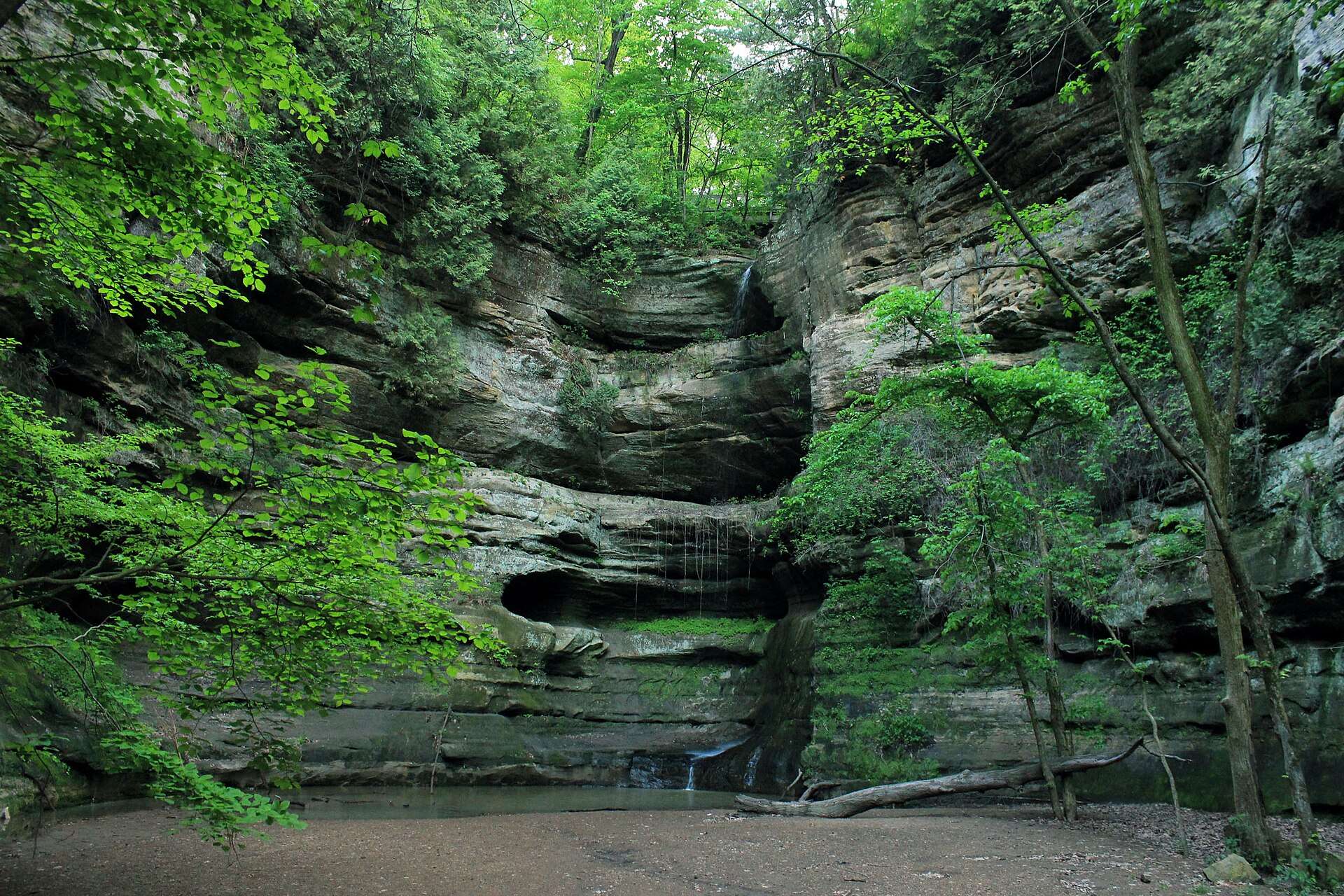
- Eighteen sandstone canyons cut the bluffs along the Illinois River — St. Louis, French, Wildcat, and Ottawa canyons the headline set — with the falls running per the alarm on meltwater and storm schedules: spring reliably, summer only after rain, winter as frozen columns.
- The eagle season inverts the calendar: bald eagles concentrate below the Starved Rock lock and dam December through February, fishing the open water — viewed from the overlooks and the visitor center scopes, with January’s eagle-watch weekends as the organized peak.
- The name’s history is told per the alarm’s register: an oral tradition holds that in the 1760s a band of Illiniwek, besieged atop the rock in intertribal conflict following Pontiac’s War, starved rather than surrender — a tradition involving the death of Native people, presented by the park with sourcing, care, and the Illiniwek’s fuller story alongside.
- The trail system runs boardwalks, stair climbs, and canyon floors — thirteen miles total, with the Starved Rock summit’s river overlook and the Wildcat Canyon rim-and-floor loop as the standard half-day; mud is the spring toll and the falls’ receipts.
- The 1930s CCC lodge anchors the park’s services — the great-room fireplace, rooms, and dining that turn winter eagle days civilized — and trolley tours cover the drive-averse; the crowd rule per the alarm is structural, since this ranks among the state’s most-visited parks.

Getting there
The drive is the plan — I-80 west, ninety-odd minutes, lots at the visitor center and trailheads that the alarm’s early-or-Tuesday rule governs on any warm weekend. Spring falls-chasers check the recent rain and the park’s conditions page; winter eagle-watchers check the river ice reports the same way. The lodge takes lunch reservations that turn a hiking day into a structured one; water and real shoes join the car regardless of season.
The day
Visitor center first for two reasons: the conditions board (which canyons are running water today) and the name’s history told at the register the alarm set — the siege tradition, its sources, and the Illiniwek presented as people rather than legend. Then the canyons by the board’s advice: St. Louis Canyon’s fall for the reliable opener, Wildcat’s rim-then-floor loop for the park’s best hour, French and Ottawa canyons for the quieter extensions. The summit overlook takes its short stair climb for the river’s sweep — the rock itself, name and all, underfoot. Spring days end muddy and satisfied; summer days end at whatever the last rain left running. Winter versions swap boots for binoculars: the dam overlooks’ eagle traffic, the frozen falls’ blue columns in the canyon mouths, and the lodge fireplace as the honest destination. The drive home beats the weekend outbound wave by the same early logic that started the day.
When to go
March through May is falls season — snowmelt first, storm-fed encores after — with mud as the entry fee. October runs the color at full canyon-rim value and full crowds; the alarm’s early-or-Tuesday rule peaks. December through February is the eagles’ and the frozen falls’ — the park’s best-kept inversion. Summer works as a green-canyon hiking day with swimming-pool humidity and waterfall odds pinned to the last storm. Every season shares one truth: this park’s fame is regional and real, and the parking-lot clock per the alarm is the only itinerary that fails loudly.
Frequently Asked Questions
Will I actually see waterfalls?
In spring or within a day or two of solid rain, yes — the named canyons run reliably then. In dry stretches the falls reduce to seeps and the canyons stand as bare sandstone architecture, still worth the walk but silent per the alarm’s August truth. The park’s conditions updates and recent-rainfall math answer the question before you drive.
How solid is the starvation story?
It’s an oral tradition from the 1760s aftermath of Pontiac’s War, recorded later and debated by historians as to detail — the park presents it as tradition with sources rather than settled fact, alongside the documented history of the Illiniwek peoples. The alarm’s told-with-care framing mirrors the park’s own: the name memorializes Native deaths, and the telling owes them accuracy.
How hard are the trails?
Boardwalks and stair systems do the elevation — expect real step counts into and out of canyons rather than scrambles. The standard loops run three to six miles at family pace; spring mud and winter ice are the real modifiers, and the park posts icy-stair closures in freeze-thaw weeks.
Are the eagle weekends worth it?
January’s organized eagle-watch events add scopes, programs, and company to what the dam offers all winter — dozens of bald eagles fishing open water below the lock. Cold, clear mornings run best. It’s the Midwest’s most accessible eagle spectacle, and the lodge fireplace afterward completes the argument.
Starved Rock or Indiana Dunes from Chicago?
The Dunes (documented on this network) for lakeshore, beach, and the South Shore train’s car-free access; Starved Rock for canyons, falls, and eagles by car. Water schedules decide it: spring rain and winter cold favor the canyons, summer beach weather favors the lake, and October color flatters both beyond fairness.